
Alpine Hardwood · April 21, 2026 · Floor Installation
Site-finished or prefinished hardwood? Which one makes sense and when
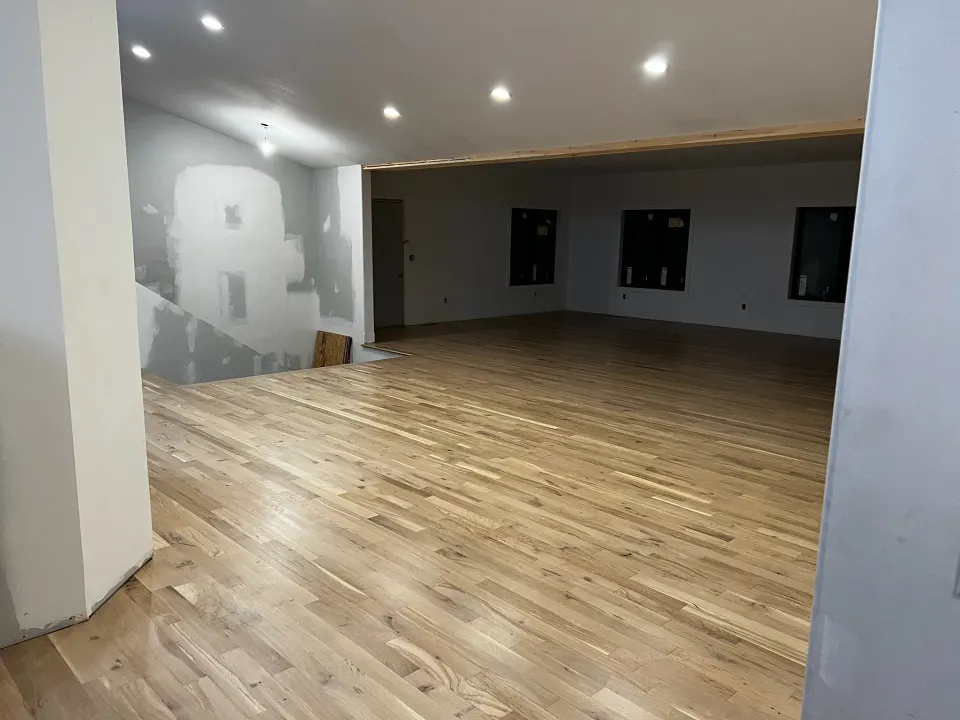
The short answer: Prefinished hardwood is the better choice when schedule rules, because it arrives coated from the factory and is ready for traffic the day it goes down. Site-finished hardwood is the better choice when the floor is a design feature, because it is sanded flat after installation with no bevels between boards and can take any stain color. On most custom builds we work on, site-finished wins, and on remodels with a tight clock, prefinished usually does.
On most custom home projects, one of the first conversations we have with the builder is prefinished or site-finished. The boards come from the same trees either way. What changes is where and when the finish goes on, and that one decision affects the look of the seams, the construction schedule, the trim details and how the floor gets repaired twenty years from now.
What the two terms mean
Prefinished hardwood leaves the factory already stained, sealed and top-coated. We nail or glue it down, cut it in at the walls and the floor is done. There is nothing left to sand or coat, so furniture can go back the same day and the other trades can keep working around it.
Site-finished (sometimes called unfinished or job-finished) means raw boards go down first. Once the whole floor is installed, we sand it flat as a single unit, apply stain if the plan calls for it, and build up two or three coats of finish over several days. Each step needs dry time, and the last coat needs to cure before the floor can take real life, so a site-finished floor usually keeps the room off limits for the better part of a week.
How the floors look up close
Every prefinished board has a small bevel along its edges, often called a micro-bevel. It is there on purpose. Because each board is coated individually at the factory, tiny height differences between neighboring boards cannot be sanded out, and the bevel hides them. From across the room the floor looks fine. Up close you see a faint line at every seam, and those grooves collect dust, crumbs and dog hair.
A site-finished floor is sanded after installation, so the boards end up dead flat with each other and the seams close up under the finish. It reads as one continuous surface. On a wide plank floor in a home with big windows, like the glass-walled lake houses around Wayzata, the difference is obvious in raking light. That flat, unbroken surface is what most people picture when they imagine a custom hardwood floor, and it is the main reason site-finished still holds its place in high-end work.
How the finishes hold up and get repaired
Factory finishes are cured under UV light and are harder than anything we can apply in a house. They resist scratches well and need little attention for years. The trade-off shows up when they do get damaged. A gouge or a water ring in a factory finish is close to impossible to blend. The repair is to replace the board, and the replacement never matches the surrounding floor quite the same way, because the floor around it has aged in the sun.
Job-site finishes are softer but repairable. Water-based polyurethane dries fast and stays clear, oil-based ambers over time and cures slower, and hardwax oil finishes soak into the wood and can be spot-repaired without touching the rest of the room. When a site-finished floor wears in the traffic lanes, a buff and coat abrades the existing finish and adds a fresh top coat. That only works while the finish is worn but not through to bare wood, which is why we tell people to call before the finish is gone rather than after. Over a twenty-year life, that difference in maintenance matters more than the hardness rating on day one.
Schedule and the order of trades
For a custom home with other trades still moving through, prefinished wins on timeline. The floor goes down, trim gets caulked and painted, appliances roll in, and nobody waits on a cure. A site-finished floor needs the space clear of other trades for most of a week, and that time comes out of a schedule that is already tight.
There is a counterweight. A site-finished floor goes in before the base trim, and the trim sits on top of the finished floor. That gives a tight trim-to-floor joint with no gap, and the painter can run caulk and finish paint in one pass. With prefinished flooring the trim usually goes on after, and getting a clean line against a factory finish takes more care. Builders who notice that detail tend to plan for it.
The scheduling piece is also where we earn our keep. We keep enough crews to be on site the week a builder needs us, and we move crews when a framing or drywall schedule slides, so a site-finished floor does not have to blow up a construction calendar. Builders like John Kraemer & Sons and Hage Homes plan site-finished floors into their schedules as a matter of course because they know the week will be held.
Stain color and matching an existing floor
With prefinished, you pick from what the manufacturer offers. The palette is wide but finite, and it changes when product lines change. Site-finished opens the door to custom stain color matching. We can match the existing floor in the rest of the house, blend two colors to land between them, or sample three or four options right on the installed floor before anyone commits. On a high-end custom build where the owner has a specific color in mind, that flexibility is usually the deciding factor.
Species matters here too. White oak takes stain evenly and is the safest canvas for a custom color. Red oak carries a pink cast that shows through lighter stains. Hard maple blotches under dark pigment stains, so when a client wants a dark maple floor we usually talk them into a different species or a lighter color instead. Prefinished maple in a dark factory color sidesteps the blotching because the factory controls the process, which is one case where prefinished solves a problem site finishing cannot.
Where each one belongs in a Minnesota house
Either floor has to live through our humidity cycle. Forced-air heat often drops January indoor humidity under 25 percent, and summer brings it back up, so solid wood shrinks in winter and swells in summer regardless of how it was finished. Prefinished boards acclimate the same way raw boards do, and both need proper expansion gaps. The one difference we see is that winter gaps between prefinished boards are slightly more visible because the bevel already draws the eye to the seam.
Engineered hardwood is the usual choice over in-floor radiant heat, in walkouts and on slabs. Most engineered products come prefinished, but site-finished engineered flooring exists and we install a fair amount of it on lake homes with radiant heat where the owner still wants a flat, custom-stained floor. Hardwood floor installation is the same trade either way. What changes is how many days the crew is on site and which days those are.
A lot of houses end up with a mix. Site-finished goes on the main level where the floor is on display, and prefinished goes in the bedrooms and the finished lower level where the schedule and the budget are tighter. Done well, the two read as the same floor from the stairs, and the owner gets the custom look where it counts without paying for it everywhere.
What we recommend
For production builds and remodels where the schedule rules, prefinished makes sense. The install is fast, the finish is tough, and the family moves back in the same week. For custom homes where the floor is a visible design feature and the stain color matters, site-finished is almost always the right call, and most of the custom builders we work with have landed there for their main living spaces. We do a lot of each, and we will tell you which one fits your house once we have seen the plans and the schedule.
Want us to look at your floor?
Free estimate after a visit. We bring sample boards.
Questions we get on the first call
Is prefinished or site-finished hardwood more durable?
The factory finish on prefinished hardwood is harder and resists scratches better out of the box. Site-finished floors use softer finishes, but they can be spot repaired and recoated in place, while a damaged prefinished board usually has to be replaced. Over twenty years the repairable floor often ends up looking better.
How long do I have to stay off a site-finished floor?
Plan on the room being out of use for most of a week. Sanding, stain and two or three coats of finish each need dry time between steps, and the last coat needs to cure before furniture and rugs come back. Water-based finishes shorten that; oil-based finishes stretch it. Prefinished floors can be walked on the same day.
Can you get rid of the bevels on a prefinished floor?
Only by sanding the floor flat and refinishing it on site, which removes the factory finish you paid for and turns it into a site-finished floor. If the bevel lines bother you in the planning stage, go site-finished from the start. If you already have a prefinished floor, the bevels become less noticeable once the floor has some wear.
Can I match a new site-finished floor to the hardwood I already have?
Yes, and this is one of the main reasons to choose site-finished. We sand a test area, mix stain samples on the new wood next to the existing floor, and adjust until the two read as one under the room's light. Species, cut and age all affect how a stain takes, so matching is done on the actual boards.