
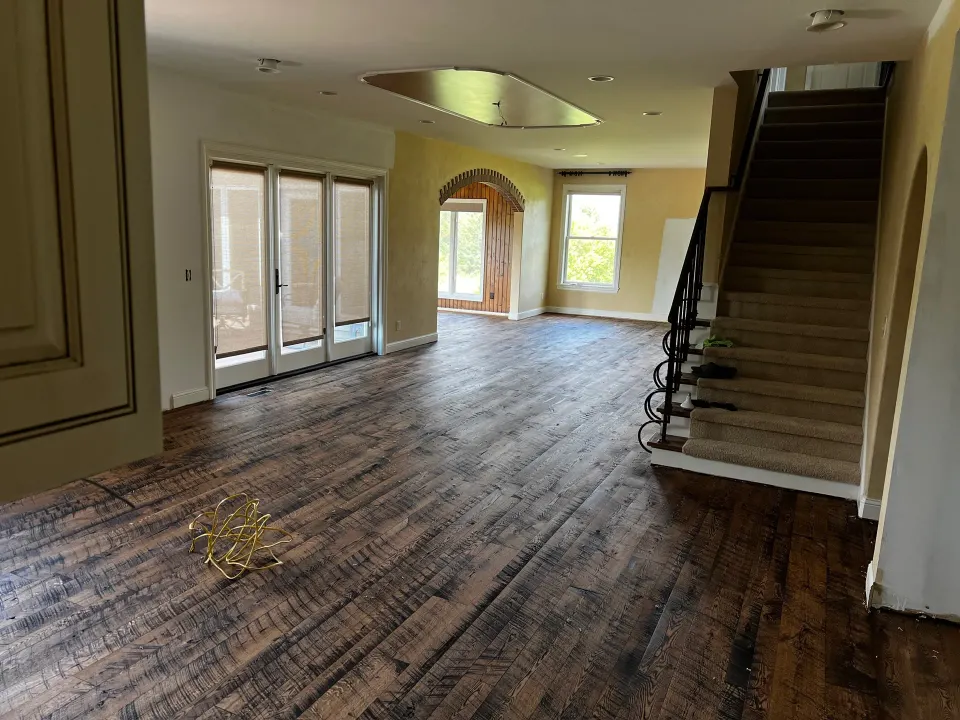
Part of hardwood floor refinishing: sanding, stain, finish and repair for floors that are already down.
Pulling up the carpet and finding out what is there
The first visit on a restoration is often a corner of carpet pulled back in a closet. What is under it tells us most of what we need to know. Staples and tack strip come with every carpet job and they all have to come out before a machine touches the floor. Pad that has been down since the 1970s leaves a rubbery residue that gums the abrasive. Paint overspray along the walls and old shellac or wax are common on floors that were last finished before the war. Then there are the surprises. A heat register that was moved and patched with a different species, a strip of pine where a wall came out, a square of plywood under where the radiator used to sit. We photograph all of it, tell you what each one means for the finished floor, and price the repairs before we quote the sanding.
Repairs come before sanding on an old floor
Sanding a loose floor is pointless because the boards keep moving after the finish is on. So we refasten what is loose, deal with squeaks from below where there is access, and replace boards that are split, rotted or gone. Replacement stock has to match the species and width, and old wood matches better than new. Original floors in these houses are mostly narrow strip in widths that are still available, and when new wood would show we source reclaimed boards that have already darkened. Replacements get laced into the existing field with staggered ends rather than dropped in as a square patch, which is the difference between a repair you hunt for and one you see from the doorway. Wide seasonal gaps are normal in a Minnesota house and we leave those alone. Permanent gaps from a floor that shrank and never came back get wood splines glued in and sanded flush.
Sanding thin old floors without using them up
A floor from 1915 has usually been sanded before, sometimes several times, and the old belt sanders of the 1950s took a lot off. We measure at a register before we commit. When the wood above the tongue is thin, we start at a finer grit than we would on a newer floor, take lighter passes, and accept that the deepest stains may stay. The goal is a flat, clean floor that can be refinished once more down the road. Old-growth oak and maple are denser than today's wood and cut slower, which works in our favor here. Hand-scraping along the walls on a thin floor beats an edger, because an edger dishes the edge, and a dished edge on thin wood is how nail heads surface.
Keeping the character and picking a finish that suits it
Not every mark on an old floor is damage. Nail holes from the original face-nailing, color variation between boards, a darker band where a rug sat for forty years, a worn spot at the bottom of the stairs are part of why people want these floors saved. We walk the floor with you after sanding and agree on what stays. The finish should suit the house. Oil-based polyurethane ambers and gives the warm look these floors had originally. Water-based stays clear and suits an owner who wants the old wood to read lighter. Hardwax oil is the closest to the oiled and waxed finishes these floors wore before polyurethane existed, and it can be spot-repaired, which is a real advantage on a floor that will keep showing its age.
What drives the cost of restoring an old hardwood floor
Restoration costs more than a refinish because of what comes before the sanding, and the amount of that work is the main variable. Carpet, pad, staples and tack strip removal is priced by the room. Loose boards, squeaks, splines in permanent gaps and board replacement are each itemized after we see the floor, and reclaimed replacement stock costs more than new. Old finish, wax and pad residue slow the sanding. A thin floor takes a slower, more careful sand. Stairs are per tread. The finish choice matters as on any refinish, and hardwax oil costs more in material than polyurethane. Houses from this era also have more rooms per square foot than a 1990s open plan, with more edges and closets, which is hand work. We give an itemized written estimate after we have pulled back the carpet and measured the floor at a register.
When we would talk you out of it
- The boards are too thin for another sand. On a floor sanded several times since the 1920s we measure at a register before promising anything, and replacement is sometimes the honest answer.
- Water or structural damage under the floor. If the subfloor or joists are soft, the right trade fixes that first and we come back after.
- You want it to look new. Old-growth oak restored well still shows nail holes and color variation. If character marks bother you, a new floor is the better fit.
What you get
- Original old-growth oak and maple kept instead of thrown out
- Repairs, splines and laced-in boards before any sanding
- Lighter sanding on thin floors so they have a future
- Reclaimed replacement stock when new wood would show
- You decide which character marks stay
- Finish chosen to suit the age of the house
How the job runs
- 1
Pull back and assess
Carpet corner up, floor photographed, thickness measured at a register, repairs listed. Written estimate with the repairs itemized.
- 2
Strip and repair
Carpet, pad, staples and tack strip out. Loose boards refastened, splines in permanent gaps, damaged boards cut out and new or reclaimed boards laced in.
- 3
Careful sand
Finer starting grit and lighter passes on thin wood, hand-scraped edges, blended under raking light. We walk it with you and agree on what character stays.
- 4
Finish
Stain if wanted, then the finish that suits the house, with cure time before furniture returns and care notes for an old floor.
Questions we get on the first call
There is hardwood under my carpet. Is it worth saving?
Almost always, if it is original oak or maple and still thick enough to sand. The old-growth wood in a 1900 to 1930 Minneapolis house is denser and tighter-grained than anything sold new today, and a restored floor does more for the house than carpet or new flooring laid over it. Pull back a corner in a closet and send us a photo. We can usually tell a lot from that.
Can you fix the gaps in my old floor?
The permanent ones, yes. Gaps that open every January and close by July are the wood breathing with Minnesota humidity, and filling those fails when the boards swell. Gaps that stay open year round get wood splines glued in and sanded flush, or the boards get relaid tight if the whole floor has shrunk. We tell you which kind you have after we see the floor in person.
Will the replacement boards match the original floor?
Close, and closer with time. We match species and width, lace the new boards into the field with staggered ends instead of a square patch, and sand and finish everything together so the surface and sheen are one. New wood starts a shade lighter than hundred-year-old oak and darkens toward it over a few years. Reclaimed boards start closer and cost more.
How much of the old character will be left after you sand?
As much as you want. Sanding removes finish, dirt and surface scratches, and leaves nail holes, color variation and the deeper marks that are part of the wood. We walk the floor with you between sanding and finish and agree on what stays. If you want a floor that looks new, say so early, because that is a different job and may mean replacement.
Related hardwood services
Where we do this work
Floor restoration across the west metro: Excelsior, Edina, Minneapolis, Delano, Wayzata, Orono, Minnetonka, Eden Prairie, Chanhassen and the lake towns between them. See everywhere we work.