
When a hardwood floor can be refinished, and when it has had enough
A solid 3/4 inch floor starts life with about a quarter inch of wood above the tongue, and every full sand takes a little of it. Most floors we see in Plymouth and Maple Grove subdivisions have been sanded once or never, so there is plenty left. The 1920s red oak in Edina's Country Club district is a different story. Some of those floors have been sanded several times and the nail heads sit close to the surface. We check thickness at a heat register or a closet threshold before we promise a full sand. If the wood above the tongue is thin, we talk about a screen and recoat or about replacement instead of one more pass that exposes fasteners. Engineered floors depend on the wear layer. A thick sawn-face plank can take a full sand once or twice. A thin veneer cannot, and we will tell you that on the first visit.
What a full sand and refinish looks like in an occupied house
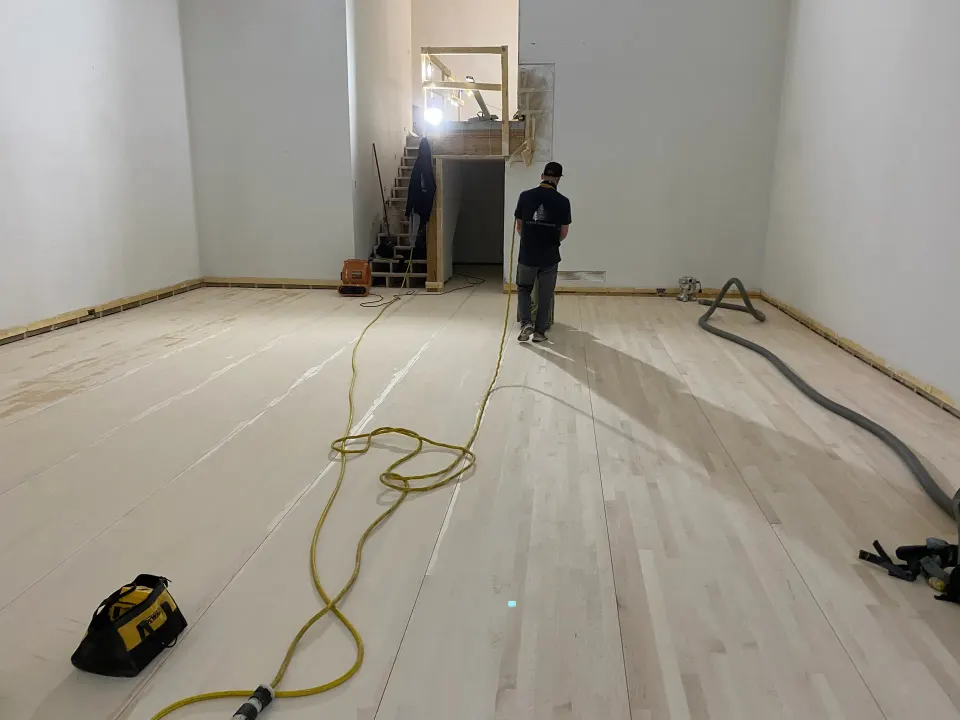
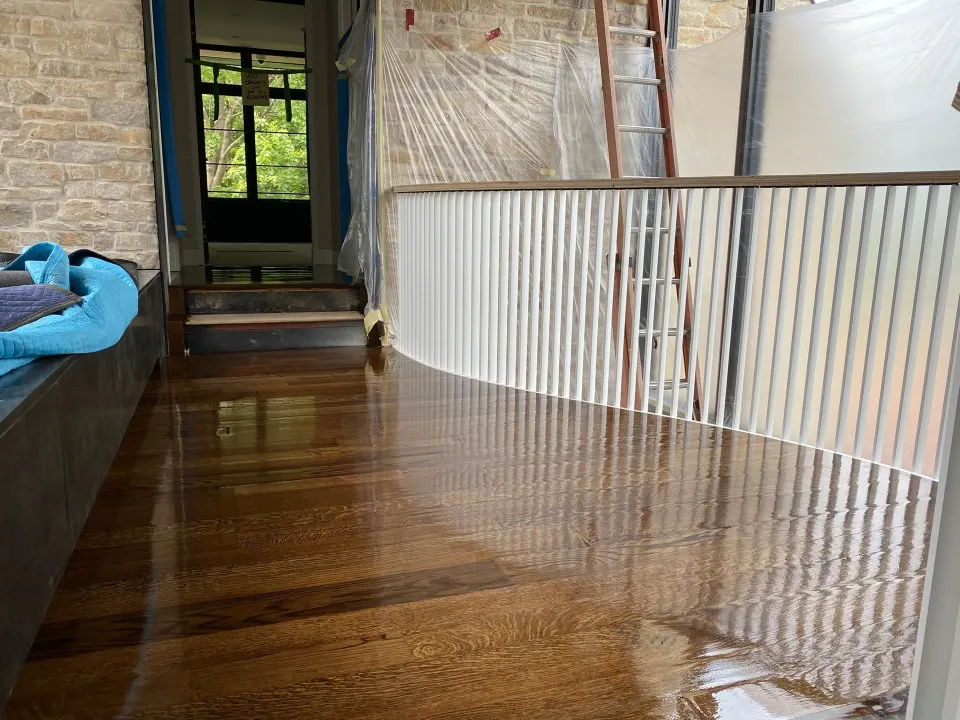
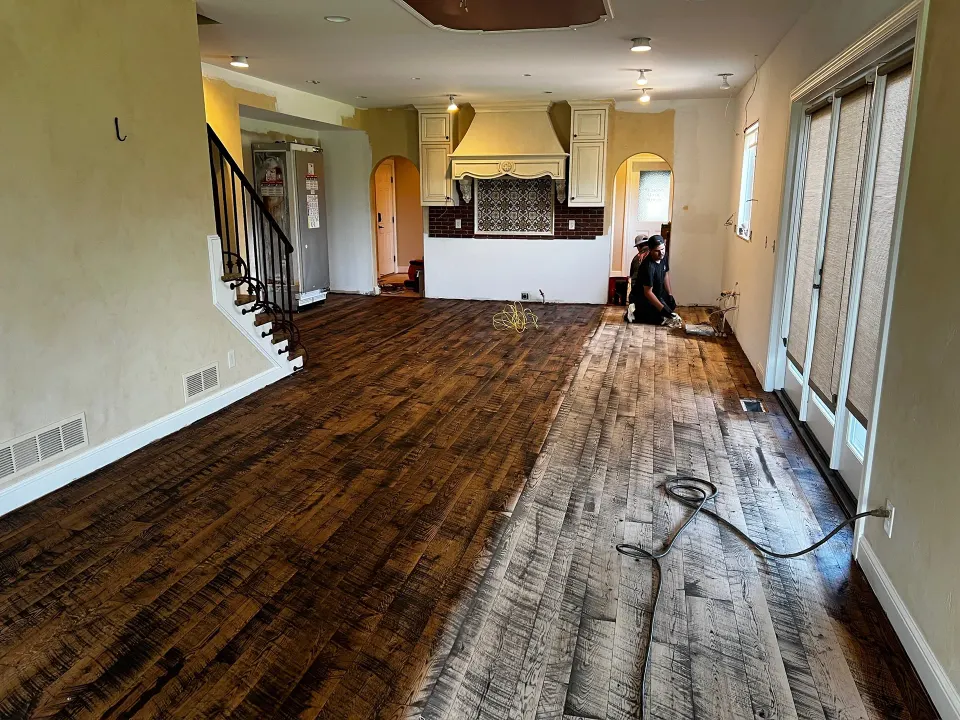
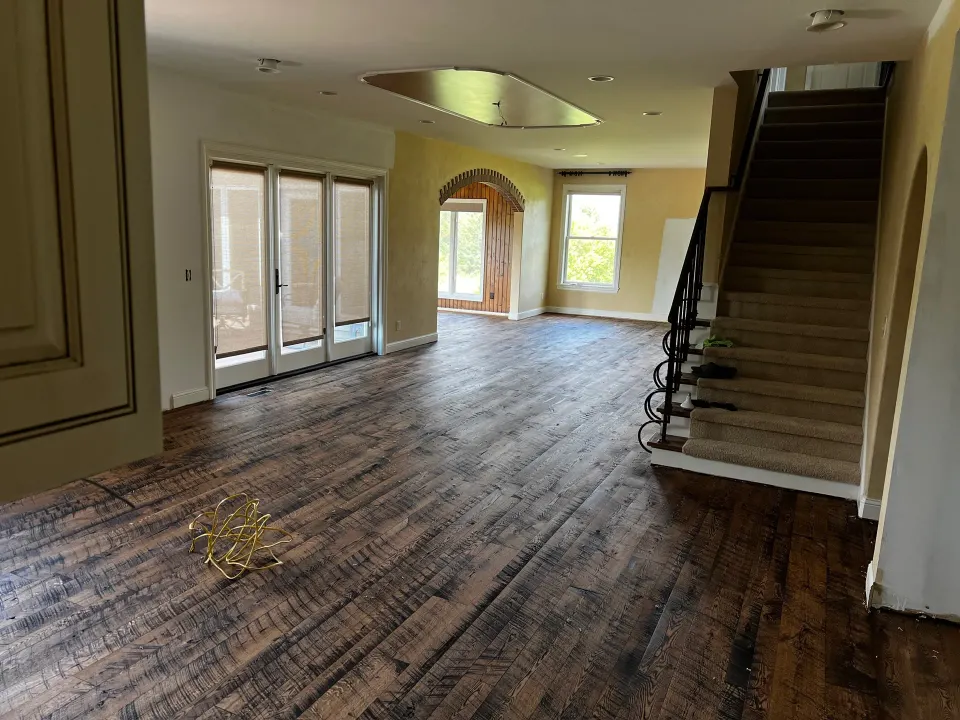
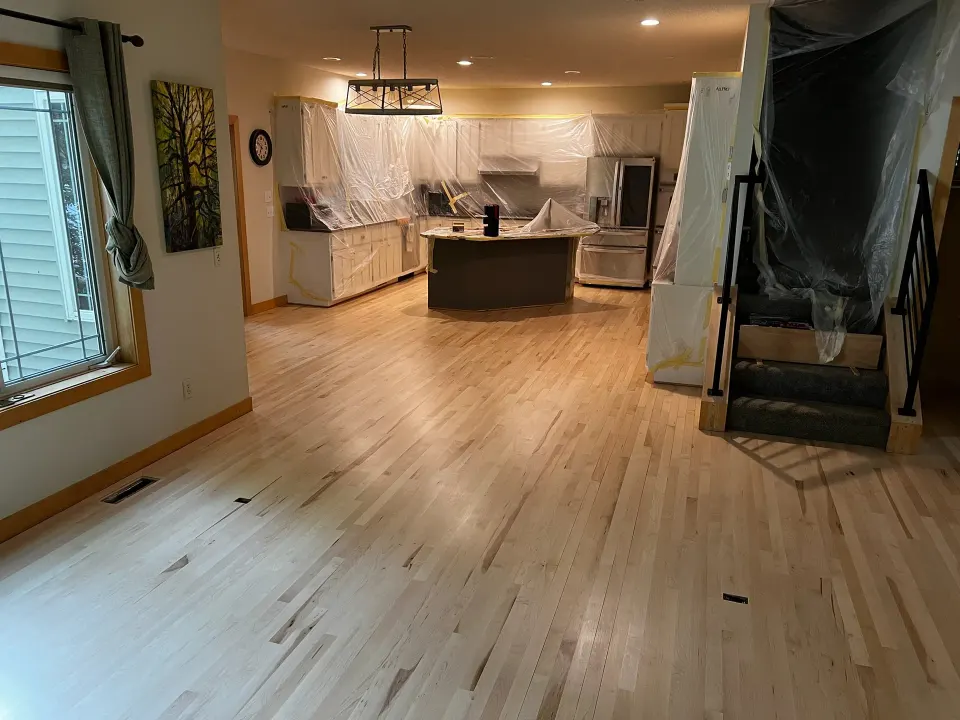
The rooms we are refinishing have to be empty, so furniture moves to the garage or into rooms we are not touching. In a kitchen that includes the refrigerator and the stove. We seal doorways with plastic, shut off the forced-air system so dust does not travel through the returns, and run sanders with vacuum extraction. The floor goes to bare wood, edges and corners get finished by edger and by hand, and the floor is vacuumed clean before any stain goes down. Stain needs a day to dry. Each finish coat needs dry time of its own, and nobody walks on the floor between coats, which is why the job runs several days. Pets and kids need somewhere else to be while the finish is wet. Furniture comes back after the finish cures, rugs wait longer, and we leave written care notes so the first weeks go right.
Choosing a stain color and a finish
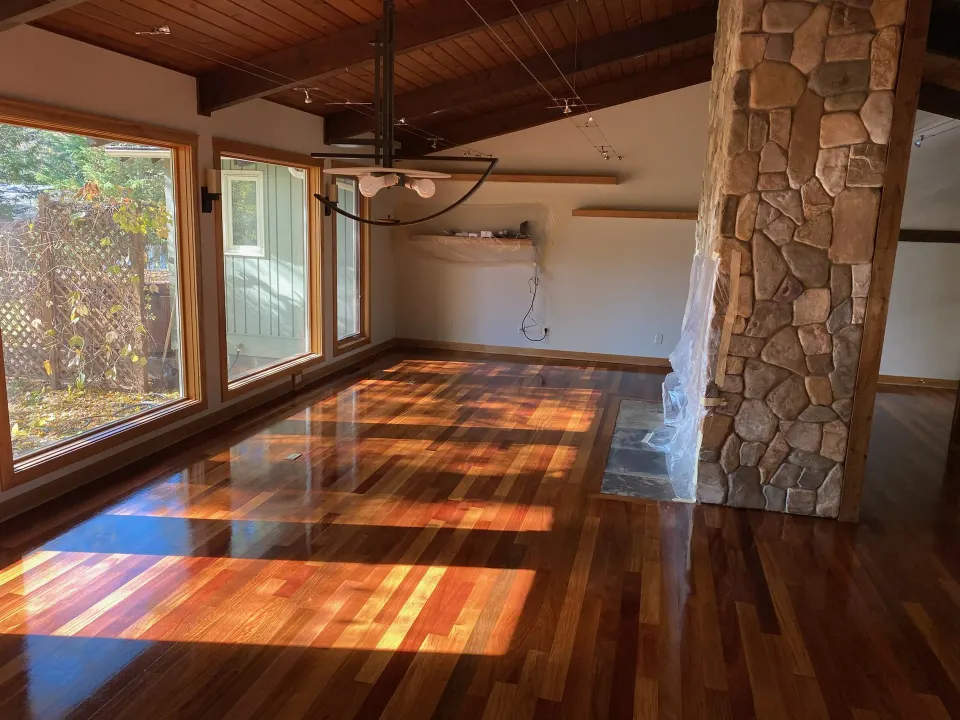
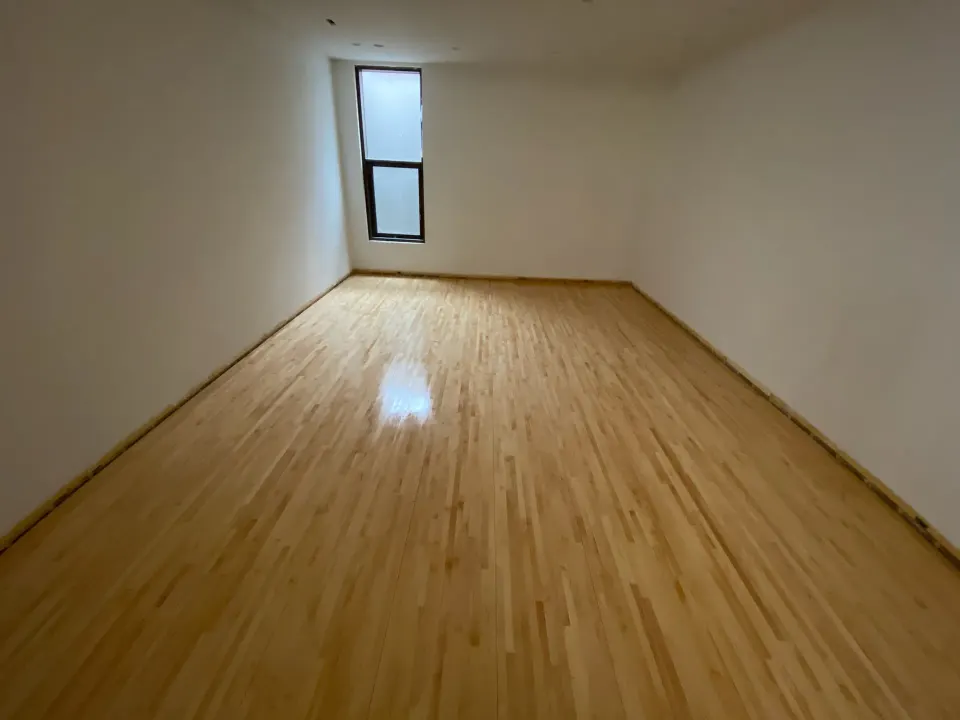
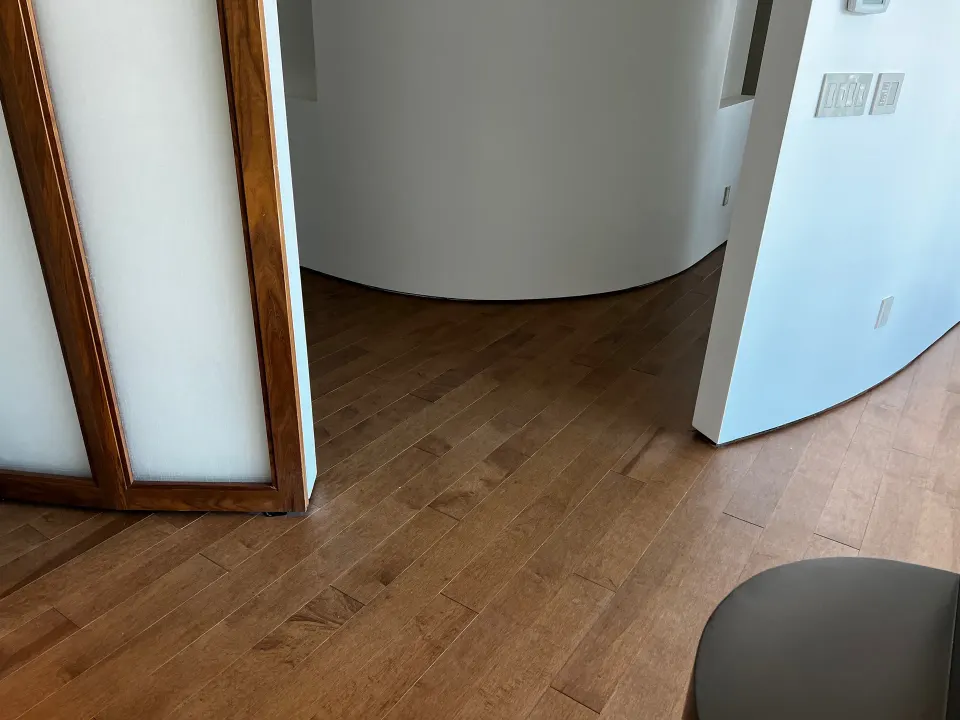
The species decides what is possible. White oak takes stain evenly and can go anywhere from pale natural to near black. Red oak carries a pink cast that fights cool gray stains, so a gray floor on red oak reads mauve unless the color is built to counter it. Hard maple blotches under dark pigment stains, and we steer maple owners toward natural or a light tone every time. We bring sample boards and lay test patches on your own sanded floor, in your own light, before the first coat goes on. For the finish, water-based polyurethane stays clear and dries fast, oil-based ambers over time and cures slower, and hardwax oil is matte and can be spot-repaired but wants a maintenance coat every so often. Sheen matters as much as color. Matte and satin hide dust and small scratches. Gloss shows everything. For most oak floors in a busy house we recommend satin.
Dust containment while we sand
Sanding makes dust, and we do not promise otherwise. What we do is contain it. Our big machines and edgers run on vacuum extraction that pulls most of the dust at the drum, doorways to the rest of the house get sealed in plastic, cabinets and built-ins get taped, and the furnace stays off while the machines are running so the returns do not carry fine dust into every room. Between the last grit and the first coat we vacuum the floor and the trim twice and tack the surface, because dust left on the floor ends up in the finish. You will still find a film on a windowsill in the next room. A furnace filter change after we leave is a good idea. Homeowners who have lived through an old-style sanding job are usually surprised at how little cleanup is left.
Timing a refinish around Minnesota's seasons
Hardwood moves with indoor humidity, and in Minnesota that swing is large. Forced-air heat drops a house under 25% relative humidity in January, boards shrink and gaps open along the whole floor. Summer brings the humidity back and the gaps close. That matters for a refinish in two ways. Gaps filled in February can squeeze the filler out in July when the boards swell, so on a winter job we fill selectively and tell you what to expect. Finish also cures on its own schedule. Cold rooms, a damp walkout or a house with the heat turned down slow the cure, and water-based finishes are touchy about humidity, so we need the house heated and ventilated in winter and the air conditioning running in a humid August. Spring and fall book up with builders' schedules, so winter is often the easiest time to get on the calendar.
What drives the cost of refinishing in the Twin Cities
Square footage is the starting point, but the shape of the job matters as much as the size. A wide open great room sands faster per foot than six small bedrooms with closets, and stairs are priced by the tread because each one is hand work. Condition moves the number next. Pet stains, deep gouges, old adhesive from carpet pad or a floor that was waxed all add sanding time or board replacement before we can finish. Stain adds a day and a step over a natural finish. The finish itself matters too, since hardwax oil and two-component water-based finishes cost more in material than a standard polyurethane, and a third or fourth coat adds labor and dry time. Furniture moving, appliance disconnects and repairs are itemized when they apply. We give a written estimate after we see the floor and measure it at a register.
When we would talk you out of it
- The finish is dull but not worn through to the wood. A buff and coat renews the top coat in about a day for a fraction of the cost, and we will tell you if that is all you need.
- The floor has already been sanded several times and the wood above the tongue is thin. One more full sand can expose nail heads, and replacement is the honest answer.
- You want a dark, even color on hard maple. Maple blotches under dark pigment, and we would rather steer you toward a natural or light finish than refinish a floor you end up disliking.
What you get
- Erases scratches, gray traffic paths and old finish down to clean wood
- Any stain color the species will take, tested on your own floor first
- Vacuum-attached sanders and sealed doorways for dust containment
- The same finish standard we hold on new floors for the Twin Cities' top builders
- Water-based, oil-based or hardwax oil, explained without the sales pitch
- NWFA member, refinishing Minnesota floors since 2007
How a refinish runs
- 1
Assessment and written estimate
We look at the floor in person, check thickness at a register, note pet stains or loose boards that need work first, and talk through stain and finish options. You get an itemized written estimate.
- 2
Sanding to bare wood
Rooms emptied, doorways sealed, furnace off. We sand through a sequence of grits with vacuum extraction, finish the edges and corners by edger and by hand, then vacuum and tack the floor.
- 3
Stain and finish coats
You approve a test patch on your own floor before stain goes down. Stain dries overnight, then the finish coats go on with dry time between each one and no foot traffic.
- 4
Cure, walkthrough and move-back
We walk the floor with you under raking light. Socks only the first day, furniture back after the finish cures, rugs later, with written care notes for the first weeks.
Questions we get on the first call
How do I know if my floors can be refinished again?
Most solid hardwood floors can take several full sandings over their life, so if yours has been done once or twice there is almost certainly wood left. The way to know is to measure the wood above the tongue at a heat register or threshold, which we do on the first visit. Floors sanded many times, like some 1920s Edina strip oak, can be too thin, and nail heads near the surface are the warning sign. Engineered floors depend on the wear layer thickness instead.
Can we stay in the house while you refinish the floors?
Often yes, if the rooms being refinished can be closed off and you have a way to reach a kitchen, a bathroom and a bedroom without crossing the new floor. Whole-main-level jobs are harder, and families with young kids or dogs usually find a few nights elsewhere easier than tiptoeing around wet finish. Oil-based finish also carries a strong smell for a few days, which pushes more people out than the dust does. Water-based finish is the easier one to live with.
How long does hardwood floor refinishing take?
A full refinish is a multi-day job. Sanding takes a day or more depending on size, stain needs a night to dry, and each finish coat needs its own dry time before the next, so the floor is off limits for most of a week in a typical house. You can walk on it in socks after the last coat dries, furniture comes back once the finish has cured, and rugs wait longer still. We give you the schedule for your house in the estimate.
Should I refinish in winter or wait for summer?
Either works, and winter is often easier to schedule because builders fill our spring and fall. The one thing to understand is movement. Boards shrink in January when the furnace drops the humidity, so gaps are at their widest and filler added then can squeeze out in July. We fill selectively on winter jobs and tell you what to expect. Keep the house heated and the air moving while the finish cures, and a winter refinish turns out the same as a June one.
Can I change my floor to a lighter color?
Yes, if the floor is being sanded to bare wood. A full sand removes the old stain along with the finish, so a dark floor can come back light, natural or anywhere between, limited only by what the species will do. White oak goes pale cleanly. Red oak keeps a pink warmth under light stains. Very light, whitewashed looks on red oak take extra steps and we will show you a sample before you decide. A buff and coat cannot change color at all.
Where we refinish hardwood floors
Refinishing across the west metro and Wright County: Wayzata, Orono, Minnetonka, Excelsior, Edina, Eden Prairie, Chanhassen, Plymouth, Maple Grove, Minneapolis, Cokato, Delano, Buffalo. See everywhere we work.