
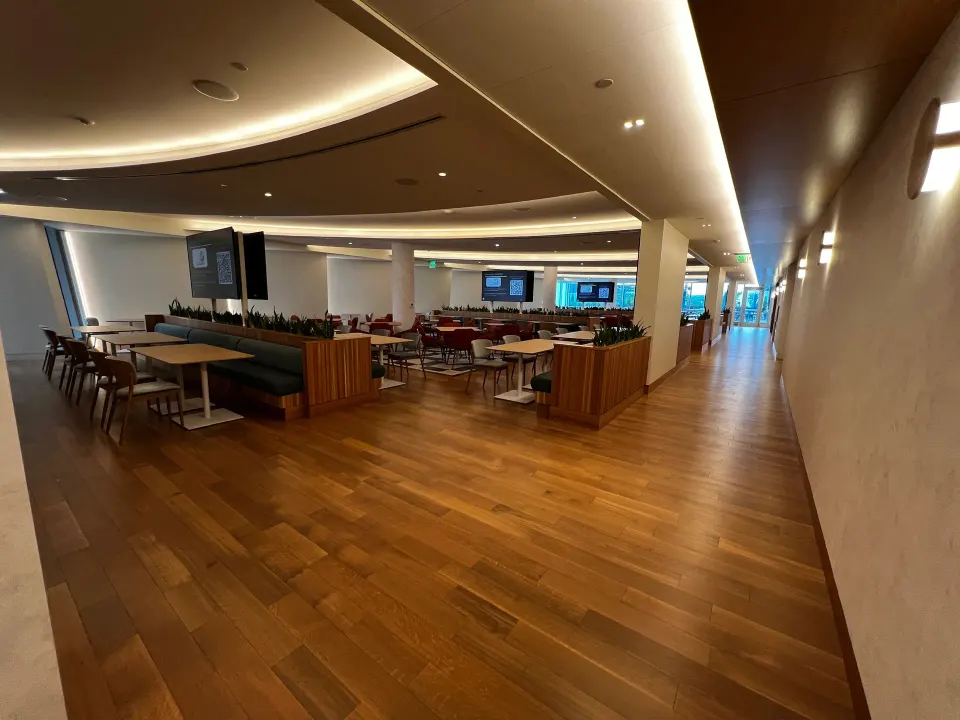
The kinds of commercial floors we install and refinish
Event and community halls are the biggest single category, usually a full refinish of a hall floor or parquet that has hosted a few generations of receptions, with a stage and columns to work around. Retail is mostly new installation, wide plank or herringbone in white oak or a gray-toned finish that sets off the merchandise, often in a tenant build-out with a hard opening date. Restaurants and lounges lean toward walnut and darker tones with a finish that can take chairs dragging across it every night. The auditorium work is the most unusual: curved hardwood seating tiers and steps with LED edge lighting, where every piece is scribed to a radius. Offices and lobbies round it out. On all of them we do the installation, the sanding and finishing and, years later, the buff and coat that keeps them from needing a full sand.
Scheduling around business hours and other trades
A business cannot close for a week the way a family can leave for a weekend. So we plan commercial work around when the space can be empty: nights and weekends for a restaurant or a store, the gap between a hall's bookings, the summer break for a school auditorium, or a phased approach where half a floor is done while the other half stays open behind a dust wall. In a build-out we coordinate with the general contractor and the other trades so the floor goes in after the ceiling, paint and trim carpentry dust are done and before fixtures land on it. Finish choice is part of the schedule too. Water-based commercial finishes can be walked on the next morning, which is often the difference between a Friday night close and a Monday reopen. We put the hours and the reopen date in the estimate, and we have enough crews to hit them.
Species and finishes that hold up to foot traffic
Hardness is the first filter. White oak at 1,360 on the Janka scale and hickory at 1,820 are the species we recommend for a sales floor or a hall, with hard maple at 1,450 the traditional choice for gym and stage floors. Walnut at 1,010 is softer and we reserve it for dining rooms and lounges where the look is worth the extra care. Black and dark stains show wear sooner than mid-tones, which matters in a retail doorway. The finish does more work than the species. Commercial-grade two-component water-based polyurethanes cure harder than residential products and hold up to rolling loads and chair legs, and a satin or matte sheen hides the scratches that a gloss floor announces. Hardwax oils are an option where a spot-repairable, natural look is wanted and the owner commits to maintenance coats. A buff and coat every few years keeps any of these from ever needing a full sand.
Subfloors in commercial buildings
Commercial subfloors are where the surprises live. New construction is usually a concrete slab, which gets a moisture test, grinding to flatten it and either a glue-down engineered floor or a sleeper system that gives us something to nail solid hardwood into. Older halls often have the original sleepers on the slab with a plank subfloor on top, and the first job is to find out whether the sleepers are sound and the plank is dry. Where they are not, we rebuild that layer before any finish flooring goes down. Raised platforms and stage decks get the same inspection. Moisture is the thing that kills commercial hardwood, so we read the slab before we order material and again before we install, and we build in the vapor control the readings call for.
What drives the cost of a commercial hardwood floor in the Twin Cities
Square footage sets the base, and commercial floors are large enough that per-foot labor matters more than in a house. The subfloor is the first variable: a flat, dry slab that takes a glue-down floor is one price, while rebuilding a sleeper system under an old hall is another. Species, width and pattern move the material line, with herringbone and curved work priced on their own. The finish system matters, since commercial two-component finishes cost more per gallon than residential ones and need more coats. Off-hours work, phasing to keep part of the space open and tight coordination with a general contractor's schedule each add labor. Refinishing an existing floor is priced on its condition, including how many previous sandings it has had and what repairs it needs. We itemize all of it in the estimate.
When we would talk you out of it
- A space that will see standing water or constant wet cleaning. Commercial kitchens, wash bays and entries that get mopped wet every night need tile or sealed concrete, and we will say so rather than install something that fails in a year.
- A floor that has to open the day after it is finished with no cure time. Even fast commercial finishes need a night before foot traffic and longer before rolling loads. If the schedule has zero slack, a prefinished floor is the safer call.
- A gym floor that needs line painting and competition-grade subfloor systems. We install and refinish hardwood; sprung gym floors with game lines are a specialty we would refer you to.
What you get
- Event halls, retail, restaurants, auditoriums and offices across the Twin Cities
- Nights, weekends and phased work to keep the business open
- Commercial two-component finishes and sheens that hide traffic wear
- Slab moisture testing and sleeper system repair before the floor goes down
- Curved and scribed work for seating tiers, columns and stages
- Buff and coat maintenance so the floor rarely needs a full sand
How the job runs
- 1
Site visit and readings
We measure the space, read the slab or existing subfloor for moisture and look at traffic, fixtures and the hours we can work.
- 2
Spec and schedule
You get an itemized estimate with species, finish system and a work schedule built around your hours or the GC's timeline.
- 3
Install or refinish
Subfloor correction, then installation or sanding with dust walls up and containment on the machines, in the phases we agreed on.
- 4
Finish and reopen
Commercial finish coats go on with cure time planned to the reopen date, and we walk the floor with you before the doors open.
Questions we get on the first call
Can you refinish our hall floor without closing for a week?
Usually. We schedule around bookings and work nights and weekends when the hall is dark. A full sand and finish still needs several days in a row for the coats to dry, so we look for that gap in the calendar with you. If the hall never closes, we phase it with a dust wall and do half at a time.
What finish holds up best in a retail store?
A commercial two-component water-based polyurethane in a satin or matte sheen. It cures harder than residential finish, takes rolling racks and foot traffic, and the low sheen hides the scuffs a gloss floor shows. Keep the color in the mid-tones at the entrance, because very dark stains show wear paths sooner.
Can hardwood go over the concrete slab in our tenant space?
Yes, two ways. An engineered floor glues directly to a slab that tests dry and has been ground flat. If you want solid hardwood, we build a sleeper system over the slab so there is something to nail into. The slab moisture reading decides a lot, so that is the first thing we check on the site visit.
How often does a commercial hardwood floor need to be refinished?
A full sand should be rare if the floor gets a buff and coat before the finish wears through, every two to five years depending on traffic. The buff and coat is a one or two night job that adds a fresh top coat. Once bare wood shows in the traffic lanes the floor needs a full sand, which is the job we are trying to avoid.
Related hardwood services
Where we do this work
Commercial Flooring across the west metro: Wayzata, Orono, Minnetonka, Excelsior, Edina, Eden Prairie, Chanhassen, Plymouth, Maple Grove and the lake towns between them. See everywhere we work.