
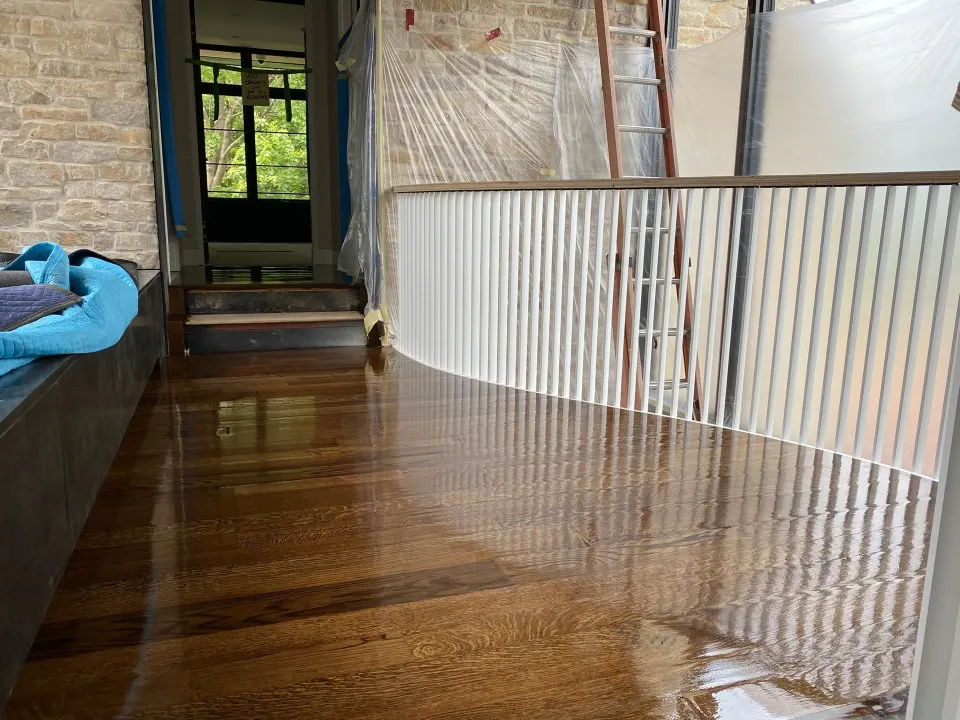
Part of hardwood floor refinishing: sanding, stain, finish and repair for floors that are already down.
When a buff and coat is enough
A recoat works when the finish is worn but the wood underneath is still sealed. Dull traffic paths from the garage door to the kitchen, a haze of fine scratches from chairs and dog nails, a sheen that has gone flat in the sunny half of the room all fit. The test we use is a few drops of water on the worst spot. If the water beads and sits, the finish is intact and a recoat will take. If it soaks in and the wood darkens, the finish is gone in that spot and a new coat will seal the gray in instead of fixing it. The best time for a buff and coat is before the wear reaches wood, which in a busy house with kids and a dog is every few years. Done on that schedule, a floor can go decades between full sandings.
When a buff and coat is not enough, and we will say so
A recoat does not fix anything below the finish. Anything that has reached the wood, from gray traffic paths to pet urine stains, needs a full sand, and a recoat over it wastes your money and ours. The other failure is adhesion. Floors that have been treated with a paste wax, an oil soap or a shine-restoring polish from the hardware store have a film on them that new finish will not bond to, and the new coat peels in sheets within months. We clean a test area and apply a patch before we commit on any floor we did not finish ourselves. Factory prefinished floors with an aluminum oxide coating can be recoated, but they take extra abrasion and a bonding step, so we test those too rather than guess.
What the day looks like
Furniture comes out of the room, including rugs and anything on felt pads. We clean the floor with a finish-safe cleaner to lift residue, then run a buffer with a fine screen over the whole surface, which dulls the old finish and gives the new coat something to grip. Edges and corners get abraded by hand. We vacuum, tack the floor until a white cloth comes up clean, and apply the new coat. A water-based finish is dry enough to walk on in socks that evening and is what we use when the family needs the room back fast. Oil-based needs overnight and carries a smell. Furniture goes back after a few days on felt pads, rugs after the finish has cured. You can keep the existing sheen or change it, and a satin recoat over an old gloss floor is a common request in houses from the 1990s.
What drives the cost of a buff and coat in the Twin Cities
A recoat is priced mostly by square footage because the work is even across the floor. The number moves when the room is cut up by cabinets and closets, since those edges are hand work, and when stairs are included, which are priced by the tread. Prep is the other factor. A floor with residue from cleaning products needs a deeper clean and sometimes a second screening, and a factory prefinished floor needs a bonding step. The finish you pick matters too, since a two-component water-based or a hardwax oil maintenance coat costs more in material than a standard polyurethane. One coat is normal for a maintenance recoat. A badly worn finish sometimes wants two, which adds a day.
When we would talk you out of it
- Any spot where the finish has worn through to gray wood. A recoat seals the gray in. Those floors need a full sand.
- Floors that have been waxed, oil-soaped or treated with a shine polish. New finish will not bond and will peel, and we would rather sand than guess.
- You want a different color. A recoat cannot change stain. Only a full sand to bare wood can.
What you get
- Usually done in a single day
- Costs a fraction of a full refinish
- No bare wood, so no stain step and far less dust
- Water test and adhesion patch before we commit
- Keep the sheen or switch gloss to satin
- Stretches the time between full sandings by years
How the job runs
- 1
Water test and adhesion check
We drop water on the worst wear and look for beading, ask what has been used to clean the floor, and apply a test patch on any floor we did not finish.
- 2
Clean and screen
Finish-safe cleaner to lift residue, then a buffer with a fine screen over the whole floor and hand abrasion along the edges.
- 3
Vacuum and tack
Two vacuum passes and a tack until the cloth comes up clean. Dust left behind ends up in the new coat.
- 4
New top coat
One coat of the finish you chose, usually water-based for a same-evening return in socks. Furniture back in a few days, rugs after cure.
Questions we get on the first call
What is the difference between a buff and coat and refinishing?
A buff and coat scuffs the existing finish and adds a new top coat over it, so the wood is never exposed and the color cannot change. Refinishing sands the floor to bare wood, which removes scratches in the wood, pet stains and the old color, then rebuilds stain and finish from scratch. A recoat takes a day. A refinish takes most of a week.
How long does a buff and coat take, and when can we walk on it?
Most recoats are done in a single day. With a water-based finish you can walk on the floor in socks that evening, put furniture back on felt pads after a few days and lay rugs once the finish has cured. Oil-based finish needs overnight before socks and a longer wait for furniture, and the smell lingers for several days.
Can you buff and coat a prefinished floor?
Usually, with an extra step. Factory finishes with aluminum oxide are very hard and slick, so they need more aggressive abrasion and a bonding treatment before new finish will stick. We test a patch first. The micro-bevels between boards stay, since a recoat does not sand them out, and the new coat will fill them slightly.
How often should I have my floors recoated?
Before the wear reaches the wood, which in a busy house is every few years and in a quiet one can be much longer. Check the traffic paths by the doors and in front of the sink. When the sheen there is clearly flatter than under the couch, it is time. Waiting until the wood is gray means a full sand instead.
Related hardwood services
Where we do this work
Buff and coat across the west metro: Orono, Minnetonka, Eden Prairie, Plymouth, Maple Grove, Cokato, Delano, Wayzata, Excelsior and the lake towns between them. See everywhere we work.