
Alpine Hardwood · April 21, 2026 · Floor refinishing
Refinish or replace? How to judge a worn hardwood floor
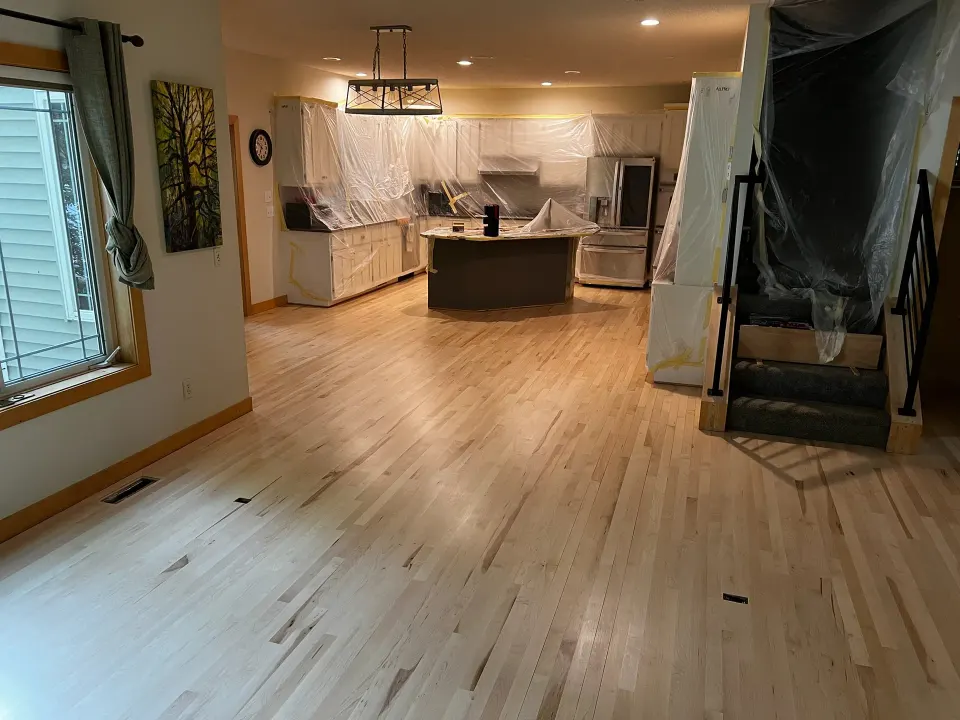
The short answer: Most worn hardwood floors can be refinished, and the ones that cannot usually fail on one of four checks: how much wear layer is left, whether the floor is still moving, how deep any water damage goes, and whether matching boards can be sourced. Many older floors land in the middle, with the worst boards replaced and the whole floor sanded and finished as one surface.
When we walk into an older home to look at a tired floor, the homeowner wants to know if it can be saved or has to come out. A photo rarely settles that. We need to get down on the floor with a moisture meter and a scraper, and we go through the same four checks every time. Here is what each one tells us and what the answer means for the job.
How much wood is left to sand
Solid hardwood from the last fifty years is usually three quarters of an inch thick. Only the top quarter inch or so sits above the tongue and groove, and that is the wear layer, the only part a sander can touch. Each full sanding takes a little of it. Most solid floors have three or four full sandings in them over their life before the tongue starts to show through.
We check the exposed edges at heat registers, thresholds and stair nosings, where the profile of the board is visible. If a sixteenth of an inch or less of wear layer remains, a full sand is a gamble. The drum can cut through to the tongue in a high spot, and once that happens the board is done. In that case we steer toward a lighter buff and coat if the finish is intact, or toward replacement if it is not.
This comes up constantly in the Edina Country Club and Morningside neighborhoods, where 1920s and 1930s red oak strip has often been sanded several times already. The floor may look fine from standing height and still be one sanding from the end. We measure before we promise anything.
Engineered hardwood has less room. A wear layer around three millimeters usually gives you one full sand. Thinner than that, the floor is replace-only, and a buff and coat is the most anyone should attempt on it.
Cupping, crowning and a floor that keeps moving
Minor cupping, where board edges sit a little higher than the centers, is common in Minnesota and often sands flat. The question is whether it will stay flat. Severe cupping, or cupping that comes back a season after sanding, means moisture is still moving into the floor from below. Flattening it again will not hold until the source is handled, and that source might be a damp crawl space or a plumbing leak nobody has found yet.
Crowning is the opposite shape, with the center of each board higher than its edges. It usually means someone sanded the floor while it was cupped and the boards dried out afterward. Crowned boards have already lost wear layer where it mattered most, and sanding them flat again removes more. Sometimes the fix is selective replacement of the worst runs rather than another full sand.
Our winters make this worse than in most of the country. Forced-air heat drops indoor humidity under 25 percent in January, and summer brings it back. Solid wood shrinks and swells with that cycle, and a floor that was installed without proper acclimation or expansion gaps shows it first. Part of the estimate visit is reading the moisture meter in several rooms, because a floor that reads wet in one corner and dry everywhere else is telling us where the problem lives.
Water damage and how deep the stain goes
A small water mark from a plant pot or a pet accident is usually sandable. Deep water staining is a different problem. Dark discoloration that runs most of the way through the wear layer will still be there after a full sand, and chasing it with more passes burns through the board.
We check by scraping a small spot in a closet or under where a rug will sit to see how far the color goes. If it penetrates more than halfway through the wear layer, those boards need to come out, even when the rest of the floor is in good shape. Dishwasher leaks, refrigerator lines and entry doors are the usual suspects, so the damage tends to be concentrated in one or two areas rather than spread across the house. That concentration is good news, because it means a repair rather than a tear-out.
Finding boards that match the old floor
Replacing individual boards in the middle of an older floor only works if the new wood matches. Standard three quarter inch red oak strip is easy to find. Quartersawn white oak, reclaimed species or odd widths take longer to source, and the lead time becomes part of the decision.
Floors from a hundred years ago can have dimensions no flooring supplier stocks anymore. In those cases we work with our suppliers to order the closest match in the same species and cut, and we plan the layout so the new boards land where they will be least noticeable. This is a regular part of work in the Minneapolis lake neighborhoods, where 1900 to 1930 homes have old-growth red oak and maple that often spent decades under carpet. Board replacement and repairs usually come before any sanding there, and the old wood under the carpet is frequently in better shape than the owner expected.
Replacing the worst boards and refinishing the rest
Plenty of projects end up as both. We pull the damaged boards, weave in replacements in the same species, then sand and finish the whole floor as one surface. New and old take stain the same way once they are sanded flat together, and the result reads as a single floor. Hardwood floor refinishing after a partial board replacement is often the right answer for an old floor with water damage in the kitchen and good wood everywhere else.
The one caveat is species with strong color variation. Hickory shows a wide range between sapwood and heartwood, so a patch of new boards can read as a lighter or darker block until the floor is stained. Red oak carries a pink cast that new boards show more strongly than boards that have had fifty years of sunlight. We talk through that before committing to a repair instead of a replacement, and on a natural-finish floor we sometimes pull boards from a closet to use in the visible repair and put the new wood in the closet.
When tearing it out is the right call
If the wear layer is gone and the species cannot be matched, pulling the floor and starting over is usually faster and lasts longer than a heroic save. Add a subfloor with its own problems and the decision makes itself. We will say so directly. A refinish that fails within a year costs more than the hardwood floor replacement would have, and nobody is happy with that outcome.
Replacement also opens up options a refinish cannot. A homeowner who wants wide plank, a different species or engineered flooring over a slab or radiant heat gets that choice only when the old floor comes out. If the existing floor is on its last sanding anyway, it can make sense to put the budget toward the floor you want rather than one more pass on the one you have.
What an estimate visit settles
Photos help us plan the visit, but they do not tell us how thick the wear layer is, what the moisture meter reads or how deep a stain runs. All four checks happen on the floor itself, and the visit usually takes under an hour. We give the same recommendation to a homeowner that we would give a builder we have worked with for years, including when that recommendation is to replace. We have been looking at old floors since 2007, and the ones that disappoint people later are almost always the ones where a floor that should have been replaced got refinished one more time.
Want us to look at your floor?
Free estimate after a visit. We bring sample boards.
Questions we get on the first call
How many times can a hardwood floor be sanded and refinished?
A three quarter inch solid floor usually has three or four full sandings in it over its life, because only the quarter inch above the tongue is wear layer. Engineered flooring with a thin wear layer typically gets one. We check exposed edges at registers and thresholds to see how much is left before recommending a full sand.
Can water-damaged hardwood floors be refinished?
Light water marks usually sand out. Dark staining that runs more than halfway through the wear layer will not, and chasing it with more sanding burns through the board. We scrape a hidden spot to see how deep the color goes. Deeply stained boards get replaced, then the whole floor is sanded and finished together.
Can you replace just a few boards instead of the whole floor?
Yes, as long as matching wood can be sourced. We pull the damaged boards, weave in new ones of the same species and width, then sand and finish the entire floor as one surface so the repair disappears. Standard red oak strip is easy to match. Old or unusual dimensions take longer to find.
How do I know if my hardwood floor is too thin to refinish?
Look at an exposed board edge at a floor register, a threshold or a stair nosing. If the wood above the tongue measures a sixteenth of an inch or less, another full sand risks cutting through. A floor that thin is usually a candidate for a buff and coat if the finish is intact, or replacement if it is not.
Will cupped hardwood floors flatten out on their own?
Sometimes. Cupping from a seasonal humidity swing often relaxes when the house dries out or the leak is fixed. Cupping that stays through a full year, or that returns after sanding, means moisture is still getting into the floor from below, and the source has to be dealt with before any refinishing will last.