
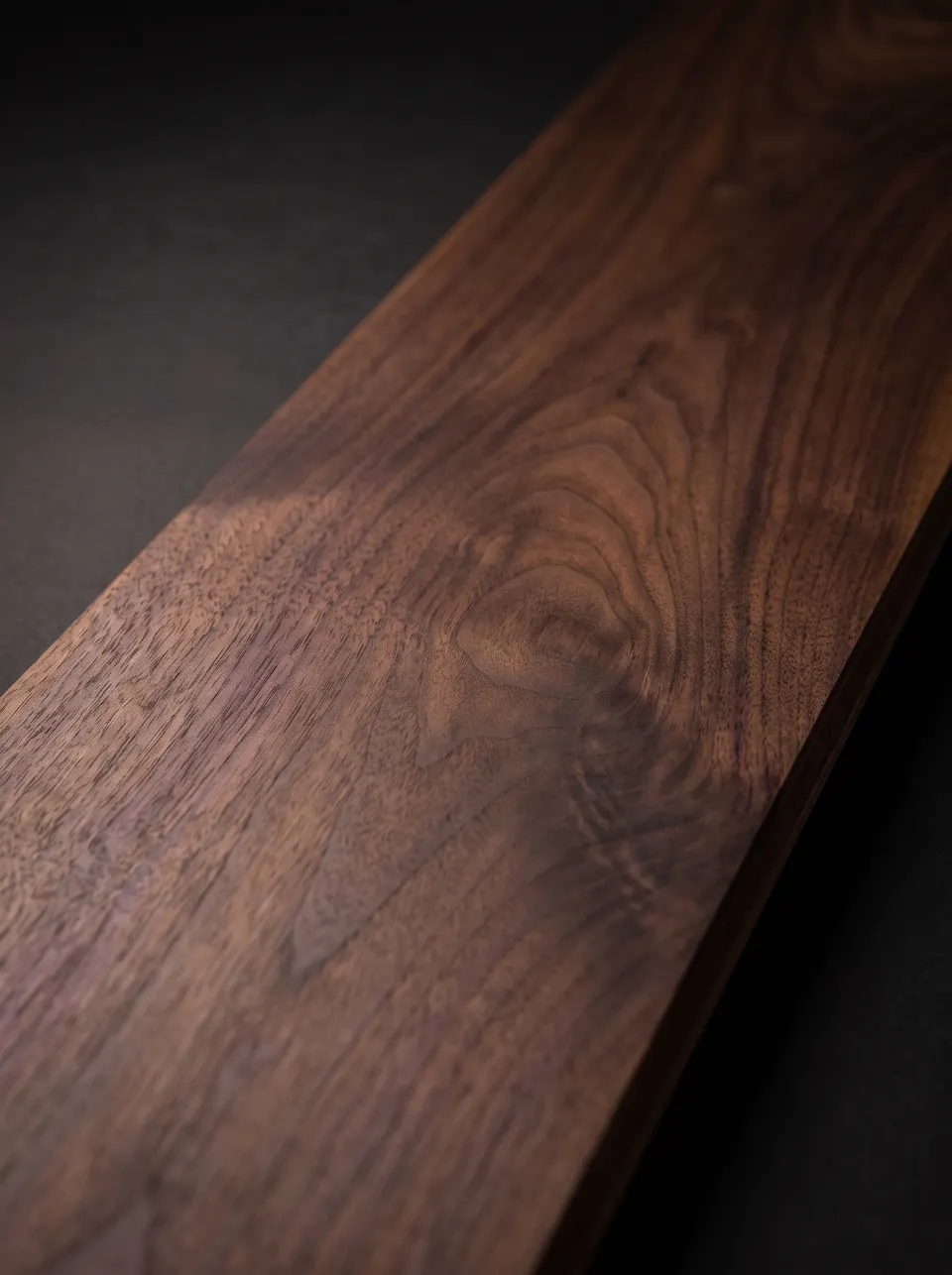
Black walnut at a glance
- Janka hardness
- 1,010 (softer than red oak at 1,290; about a quarter softer than white oak)
- Typical cuts
- Plain sawn for the broad ribbon grain; some quartered for straighter lines
- Common widths
- 4 to 7 inch plank; wider in engineered; also stair treads, borders and inlays set into oak floors
- Finishes it takes
- Clear finishes almost always; water-based keeps the purple undertone, oil-based warms it; hardwax oil suits it well
- Color and grain
- Deep chocolate heartwood with purple and gray tones; pale sapwood unless steamed; ribbon grain
- Minnesota seasons
- Moderate movement, similar to oak; the dark color makes winter gaps more visible than they are
- Where it is used most
- Formal rooms, studies, bars and lounges, stair treads, inlays and medallions
What a black walnut floor looks like finished
A clear-coated walnut floor is deep brown with purple and smoky gray running through it, and the ribbon grain catches light differently from every angle. Water-based polyurethane holds that cool, almost plum undertone; oil-based warms the floor toward red-brown and deepens it. Hardwax oil gives a low, matte surface that suits walnut especially well and is easy to spot-repair, which matters on a species that dents. Walnut sapwood is nearly white, so unless the boards are steamed at the supplier to even the color, a natural-grade walnut floor carries pale streaks.
Hardness, dents and the honest case for walnut
Walnut is a softer wood than oak and no finish changes that. Finish protects against scratches and spills; dents come from the wood underneath compressing, and at 1,010 walnut compresses under heels and dropped objects that oak would not record. The homeowners happiest with walnut accept the dents as patina, keep it out of the kitchen and mudroom, or both. Where the color is the whole point of the room and traffic is light, nothing else gives that depth without stain. Where the room is the busiest in the house, stain white oak dark instead.
Black walnut through a Minnesota winter and summer
Walnut moves about as much as oak through the humidity swing, so a solid floor gives up a little width in January and takes it back in July. The difference is visibility. A hairline gap in a pale oak floor is a faint line; the same gap in walnut shows light subfloor through dark boards and reads as a crack. A humidifier on the furnace helps more than anything we can do at install, along with acclimation in the house and expansion room at the walls. Over radiant heat and in walkouts we install engineered walnut.
Where black walnut belongs in the house
Dining rooms, studies and formal living rooms, where the color sets the mood and traffic is light. Stair treads, where the wood is thick enough to take wear and the contrast against painted risers is sharp. Inlays and medallions set into white oak floors, which is how a good share of the walnut we handle gets used. Bars and restaurant dining rooms where the owner wants warmth and accepts maintenance. We would keep it out of kitchens with kids and out of mudrooms.
Where black walnut is the wrong answer
- Kitchens, mudrooms and entries. Walnut dents under dropped pans, boots and dog claws, and the finish cannot stop it.
- Homeowners who want a floor that looks new for twenty years. Walnut gathers dents and lightens in sun; if that bothers you, stain white oak dark instead.
- Tight budgets. Walnut is one of the more expensive domestic species, and the premium buys color, not durability.
Questions about black walnut floors
Is walnut too soft for floors?
Soft for a floor, not too soft for the right room. At 1,010 on the Janka scale it dents under heels and dropped objects that oak absorbs, so we keep it out of kitchens and mudrooms. In a dining room, study or formal living room with normal traffic, a walnut floor holds up for decades.
Does walnut fade?
Yes, in the other direction from most woods. Oak and maple darken in sunlight; walnut lightens, drifting from deep chocolate toward a warmer medium brown over the years, fastest in rooms with large south-facing windows. Rugs and furniture leave darker shadows. Moving rugs seasonally evens it out, and a finish with UV inhibitors slows it.
Can I get the walnut color on a harder wood?
Yes. A dark stain on white oak gets close to walnut's depth on a floor rated 1,360 instead of 1,010, and it costs less. You lose the purple undertone and the ribbon grain, which are what make real walnut read as walnut. We put the two side by side on sample boards so you can judge.
Services for black walnut floors
Other species we install
White oak, Red oak, Hard maple, Hickory. Compare them side by side.