
Red oak at a glance
- Janka hardness
- 1,290 (a step below white oak at 1,360; plenty for a busy family home)
- Typical cuts
- Plain sawn almost always, with the broad cathedral grain most people picture as oak
- Common widths
- 2 1/4 inch strip in pre-1990 homes; 3 1/4 inch in the 1990s and 2000s; 4 to 5 inch plank in new installs
- Finishes it takes
- Oil-based and water-based polyurethane, hardwax oil; stains well in medium and dark tones, less well in gray and whitewash
- Color and grain
- Pink to salmon heartwood that warms to honey under finish; open, swirling grain with strong cathedrals
- Minnesota seasons
- Moderate, about the same as white oak; old strip floors that gap every winter keep doing it after a refinish
- Where it is used most
- Existing floors in older homes, additions that need to tie into them, bedrooms and halls where cost matters
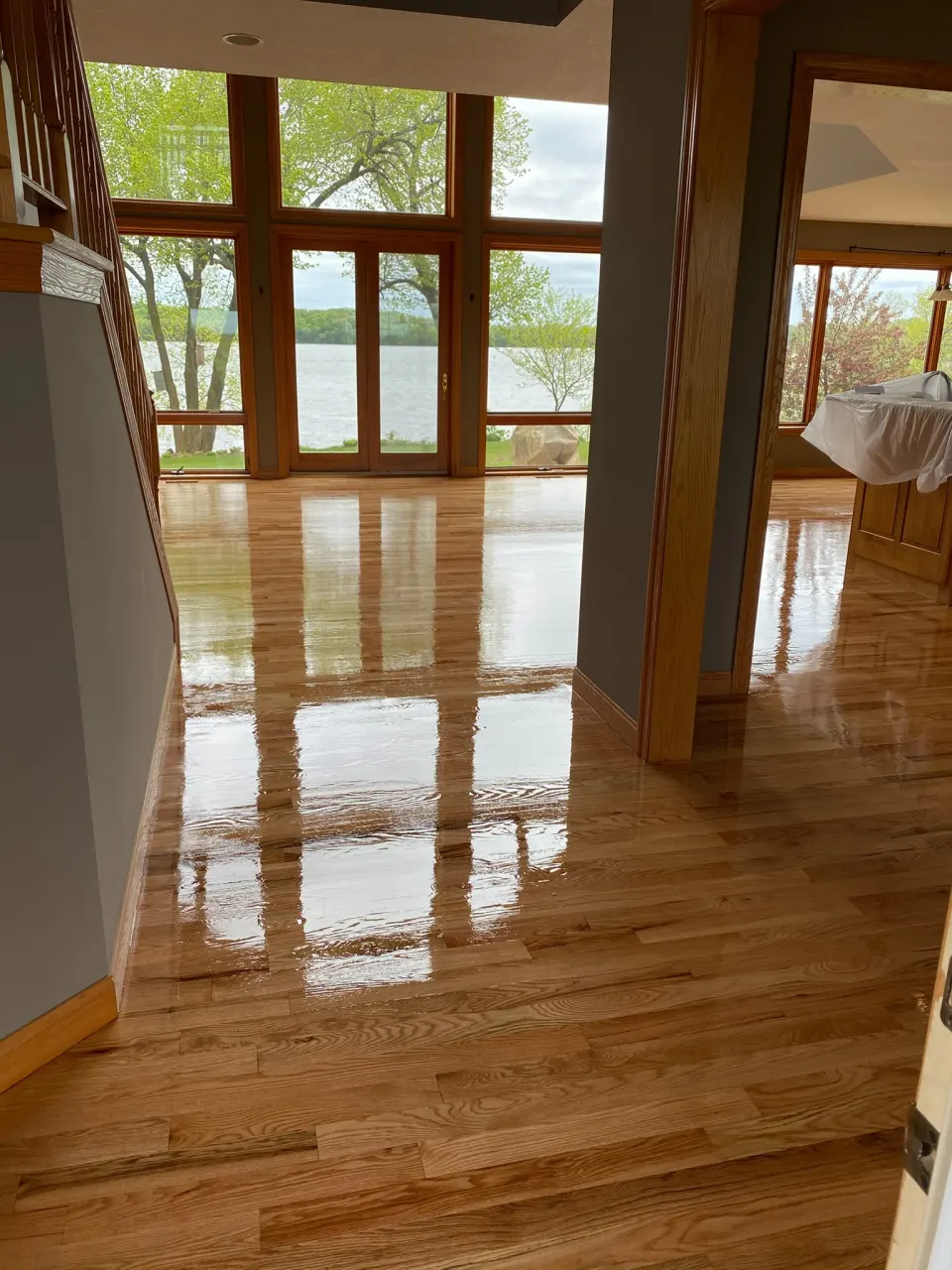
What a red oak floor looks like finished
A natural red oak floor under oil-based polyurethane is the honey-amber color most people picture when they think of hardwood in an older Minneapolis or Edina house. The grain is open and swirling, with the big cathedral arches that plain sawn oak throws, so a red oak floor has more visual texture than white oak at the same width. In the 1900 to 1930 homes around Lake Harriet and Lake of the Isles, the old-growth red oak has tighter growth rings and a quieter grain than new stock.
How red oak handles stain and finish
Red oak stains well in the warm and dark range. Medium browns and near-black cover the pink and come out even. The trouble starts with cool colors. A gray or whitewash stain fights the pink undertone, and the floor can read lavender in some light. We test it on a sample board first; sometimes a touch of green in the mix neutralizes it, and sometimes the honest answer is that the look you want belongs on white oak. On a refinish, a full sand to bare wood lets you change the color. A buff and coat does not.
Red oak through a Minnesota winter and summer
Red oak and white oak move about the same amount with the seasons, which is to say a solid strip floor gaps a little in January and closes by summer. What changes the math on a refinish is thickness. A 3/4 inch strip floor that has been sanded three or four times may have little wood left above the tongue, and one more aggressive sand can go through it. We measure before we quote. Below grade and over radiant heat, engineered is the answer.
Red oak or white oak for a new floor
For new work we usually point people to white oak, and the reason is color rather than durability. The Janka numbers sit close, 1,290 against 1,360. Red oak wins when you are adding on to a house that already has it, when you want the warm honey tone without staining, and when the budget needs room. It loses when the plan calls for a natural, gray or pale finish, where the pink shows.
Where red oak is the wrong answer
- Gray, whitewashed or very pale natural finishes. The pink undertone shows through cool colors, and no amount of sanding takes it out.
- Wide plank and pattern work in a new build. The open cathedral grain gets busy at 7 inches and in herringbone; white oak carries those layouts better.
- Below grade or over radiant heat in solid form. Engineered is the answer there, and usually engineered white oak.
Questions about red oak floors
My 1960s floor is red oak. Should I refinish it or replace it?
Refinish it, in almost every case. A sound red oak strip floor from the 1960s sands flat, takes a modern stain and will outlast a new floor of lesser material. We replace only when the boards are too thin from past sandings, there is water damage, or the layout is changing enough that patching would show.
Can you stain red oak gray?
You can, but it is not always worth it. The pink undertone pushes gray stains toward purple, so we test a mix on your own boards first. Some floors get there with a neutralizing tint under the gray. If the sample does not convince you, white oak is the cleaner way to that color.
Will new red oak match the floor I already have?
Species will match, and after a few months of light the color catches up, but the grain and board width need attention. We order the same width as the existing floor and lace the new boards into the old at the seam rather than butting them, then sand and finish both together so the joint disappears.
Services for red oak floors
Other species we install
White oak, Hard maple, Hickory, Black walnut. Compare them side by side.