
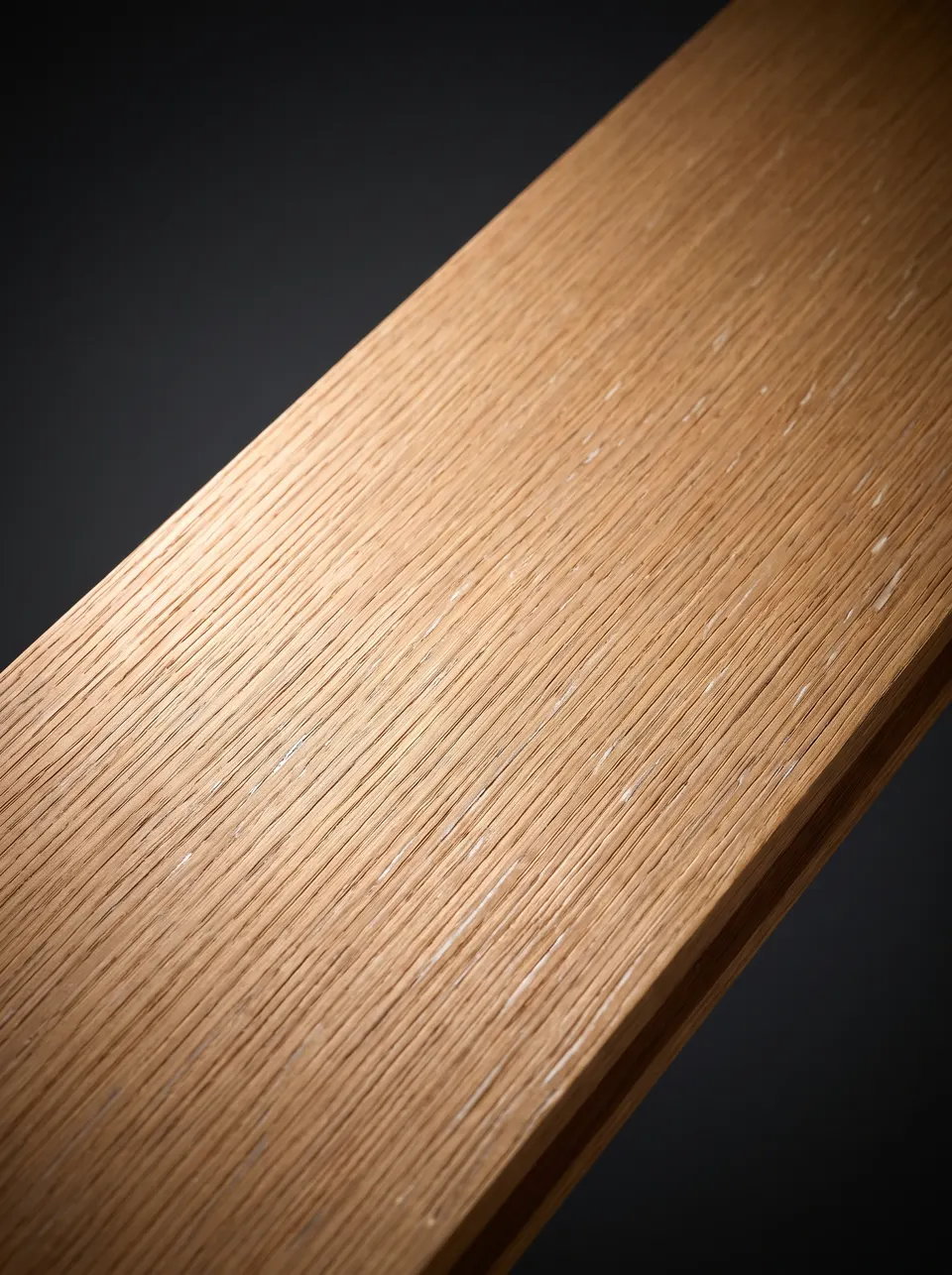
White oak at a glance
- Janka hardness
- 1,360 (harder than red oak at 1,290, softer than hard maple at 1,450)
- Typical cuts
- Plain sawn is standard; rift and quartered for straight grain with ray fleck
- Common widths
- 2 1/4 inch strip in older homes; 5 to 7 inch plank in most new builds; 8 to 10 inch in engineered formats
- Finishes it takes
- Water-based or oil-based polyurethane, hardwax oil, and custom stain from pale to near-black
- Color and grain
- Tan to light brown with a gray-olive undertone; closed, tight grain; subtle rays in quartered boards
- Minnesota seasons
- Moderate. Solid plank gaps a little in January and closes by summer; engineered stays flatter over radiant heat
- Where it is used most
- Open main floors, kitchens, great rooms, stairs and treads, herringbone and chevron patterns
What a white oak floor looks like finished
Finished clear, white oak reads tan with a cool gray-olive undertone, and water-based polyurethane keeps it close to that raw color. Oil-based finish pushes it warmer and more amber over the first year. The grain is closed and tight, so the floor looks calm from across a room, and rift or quartered boards add the straight lines and small ray flecks common in Lake Minnetonka new builds. That even grain is why white oak carries wide plank without looking busy, and why nearly every herringbone and chevron floor we lay is cut from it.
How white oak takes stain and finish
White oak is the easiest flooring species to stain evenly. The pores take pigment at a consistent rate, so pale naturals, gray-browns and near-blacks come out the color on the sample board instead of blotching the way maple does. For a custom color, or on a subfloor that is less than flat, we site-finish. When the schedule is tight and the color is a stock one, prefinished white oak saves days and skips the cure time.
White oak through a Minnesota winter and summer
Forced-air heat drops indoor humidity under 25 percent in January, and every solid floor in the house gives up moisture and shrinks a little. White oak moves a moderate amount, about the same as red oak and less than hickory, so hairline winter gaps are normal and close again by July. Over in-floor radiant heat, in a walkout or on a slab, we install engineered white oak instead; the plywood core holds the face flat through the swings.
White oak or red oak, the question that comes up on every estimate
Both are hard enough for a busy house, and the Janka numbers sit close, 1,360 for white oak and 1,290 for red. The difference you see is color. Red oak has a pink to salmon cast and a more open, swirling grain; white oak sits tan and gray with tighter lines. Under a natural or light gray finish the pink shows through on red oak, which is the main reason most new builds spec white. If you are matching a floor from the 1960s to the 1990s, it is almost certainly red oak, and matching species beats preference.
Where white oak is the wrong answer
- Below-grade rooms and slabs in solid form. Engineered white oak is the right version there.
- Refinishes of older homes that already have red oak down. Patching white oak into a red oak floor creates a mismatch instead of fixing one.
- Homeowners who want strong color and grain variation board to board. White oak is uniform by nature; hickory or a rustic-grade walnut gives that look.
Questions about white oak floors
Is white oak better than red oak for floors?
For new work, usually yes, because white oak takes gray and natural finishes without a pink cast and is a little harder, 1,360 versus 1,290 on the Janka scale. For a refinish of an existing red oak floor, red oak is better because it matches. Price and durability are close enough that color decides it.
Does white oak turn yellow over time?
Some, yes. Under oil-based polyurethane white oak ambers noticeably in the first year and keeps warming slowly after that. Under water-based polyurethane or a hardwax oil it stays much closer to its raw tan color. Sunlight from big windows adds to the shift.
Can white oak go over in-floor heat?
Yes, as engineered white oak. The plywood core keeps the face flat as the slab or subfloor warms and cools, where a solid 3/4 inch plank can cup or gap. We follow the flooring manufacturer's temperature limits for the system and acclimate the boards in the house before the install.
Services for white oak floors
Other species we install
Red oak, Hard maple, Hickory, Black walnut. Compare them side by side.