
Hickory at a glance
- Janka hardness
- 1,820 (the hardest common domestic species; about a third harder than white oak)
- Typical cuts
- Plain sawn; calico and rustic grades show the most sapwood and heartwood contrast, select grades the least
- Common widths
- 3 1/4 to 5 inch solid; 5 to 7 inch engineered, often hand-scraped or wire-brushed
- Finishes it takes
- Oil-based or water-based polyurethane; natural and medium stains; dark stains calm the variation
- Color and grain
- Cream sapwood next to brown heartwood, often in one board; bold grain with knots in rustic grades
- Minnesota seasons
- Moves the most of the species we install; strict acclimation, humidity control and wider expansion gaps
- Where it is used most
- Cabins and lake homes, mudrooms, houses with big dogs, rustic and farmhouse interiors
What a hickory floor looks like finished
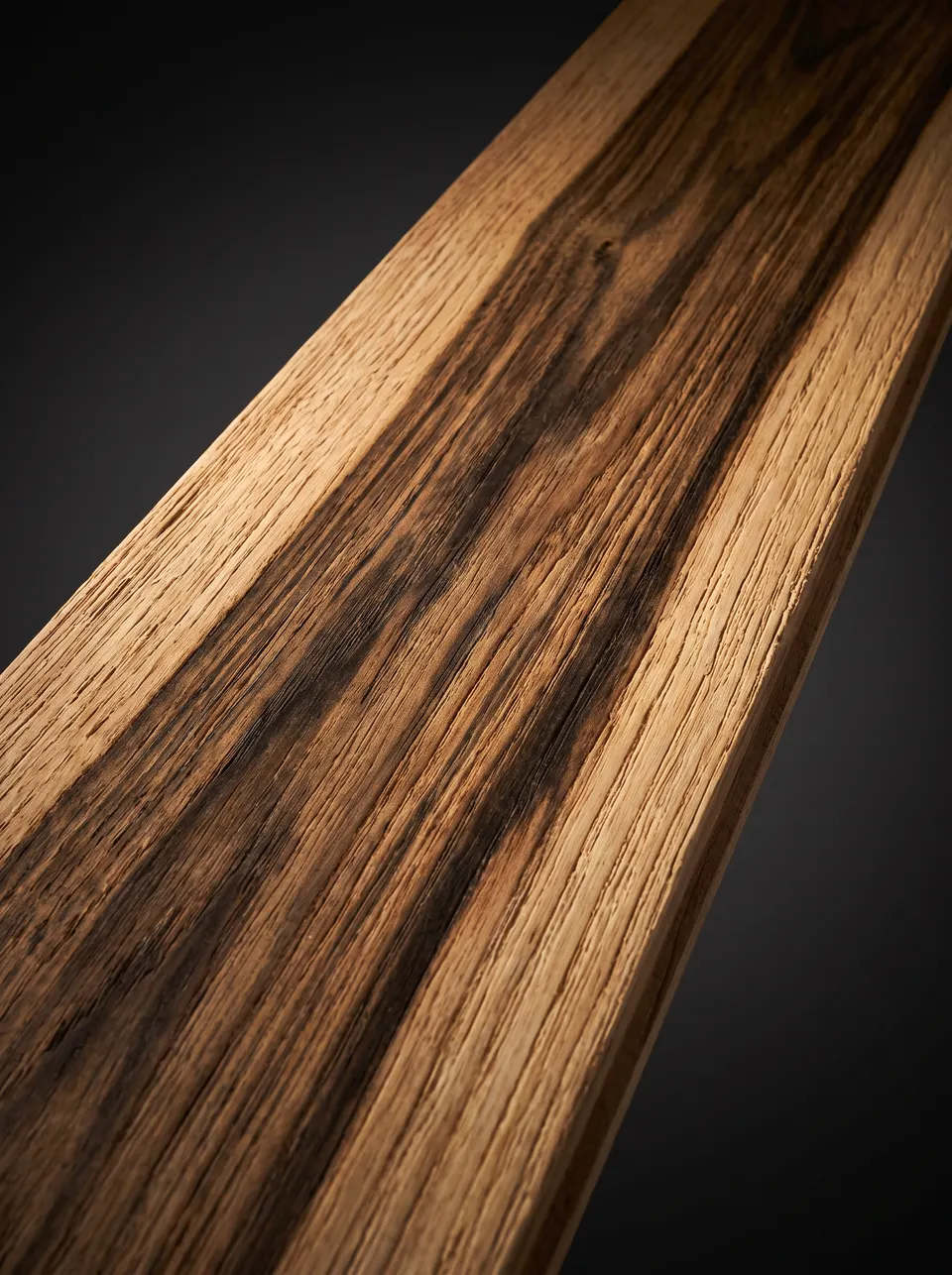
A natural hickory floor is a patchwork. Cream, tan, honey and reddish brown sit side by side, sometimes within one board, and the grain is bold with knots and mineral streaks in the rustic grades. Finished clear it is bright and lively; it suits a cabin on Cokato Lake or a farmhouse kitchen far better than a quiet modern great room. Hand-scraped and wire-brushed engineered hickory adds texture that hides wear, which is why it ends up in so many mudrooms.
How hickory handles stain and finish
Hickory is dense enough that stain penetrates slowly, and the sapwood and heartwood take it at different rates, so a light stain can increase the contrast rather than tame it. A dark stain nearly erases the variation and leaves a tough, uniform floor, which is the right call when a homeowner wants hickory's hardness without its busy look. Oil-based polyurethane warms the cream sapwood toward gold; water-based keeps it pale. We sample on a run of boards rather than one, because a single hickory board tells you almost nothing about the floor.
Hickory through a Minnesota winter and summer
Hickory moves more with humidity than oak or maple, and it is stiff enough that when it moves it can take a fastener with it. We acclimate it in the house longer than oak, we check moisture in the subfloor and the boards before the first row goes down, and we hold a wider expansion gap at the walls. Expect winter gaps in a solid hickory floor and expect them to close in summer. In a seasonal cabin that goes cold and dry for weeks, engineered hickory is the safer floor, and over radiant heat it is the only one we install.
Where hickory belongs in the house
Mudrooms, kitchens and family rooms in houses with kids and dogs, where the hardness earns its keep. Cabins and lake homes where the variation matches log walls and reclaimed beams. Rustic and farmhouse interiors in Wright County new construction on acreage. It does not belong in a formal room or a modern open plan with white walls, where the busy color reads as noise, and it is a poor match next to an existing oak or maple floor.
Where hickory is the wrong answer
- Quiet, modern interiors. The sapwood and heartwood contrast fights clean lines and white walls; white oak is the calmer choice.
- Herringbone, chevron and other patterns. The color swing turns a pattern into a checkerboard, and the density makes the cuts slow and hard on tooling.
- Dry houses without humidity control. Hickory moves the most of any species we install, and a seasonal cabin that is left cold should get engineered hickory, not solid.
Questions about hickory floors
Is hickory too busy for a whole house?
In most homes, yes, if it is a rustic grade finished natural. The board-to-board color swing is strong, and across a whole main floor it can read as noise. A select grade or a medium to dark stain tames it a lot. We lay out a dozen boards on your floor before you decide.
Is hickory a good floor for dogs?
It is the best domestic choice. At 1,820 on the Janka scale it resists dents from claws and dropped bowls better than oak or maple, and the varied color and grain hide the small scratches that do happen. Pair it with a satin or matte finish, since gloss shows scratches on any species.
Does hickory gap in the winter?
Yes, more than oak. Hickory moves the most of the common flooring species, so a solid hickory floor in a forced-air house will show hairline winter gaps and close them again by summer. A humidifier narrows the swing. In a cabin that sits cold for weeks, engineered hickory stays flatter than solid.
Services for hickory floors
Other species we install
White oak, Red oak, Hard maple, Black walnut. Compare them side by side.